
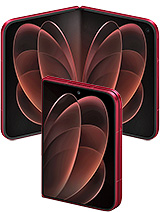
Xiaomi 18 Fold


Xiaomi 18 Fold Review: Duo-n't Be Fooled
Pros
- Strong camera system with Leica-branded lenses.
- Exceptional 6,000 mAh battery capacity providing top-tier endurance.
- Solid performance powered by a custom 3nm chip.
- Effectively camouflaged screen crease.
- High IP58 and IP59 dust and water resistance.
Cons
- Ultrawide camera is not as wide as competitors.
- HyperOS aggressively prevents third-party app notifications.
- HyperOS causes broken Google widgets.
- Inability to install third-party launchers due to HyperOS.
- Software limitations make it unviable for Western users.
The Xiaomi 18 Fold presents a nearly perfect hardware package, boasting an effectively camouflaged screen crease, high dust and water resistance, and an exceptional 6,000 mAh battery with top-tier endurance. Its camera system, featuring Leica-branded lenses and a periscope telephoto, delivers robust and realistic photos, complemented by solid performance from a custom 3nm chip. The phone also offers good value with included accessories like a charger and case.
However, the device is severely hampered by its China-exclusive HyperOS software, which aggressively manages background processes, preventing notifications and breaking Google widgets. This software limitation, coupled with the inability to install third-party launchers, ultimately ruins an otherwise impressive device, making it unviable for Western users despite its hardware strengths.
“I'm just not going to bother with any of that because for me, HyperOS, well, it just ruins everything.”
“I mean, it really is close to perfect. But as it stands, it seems those of us looking for more smartphone short kings in the west will need to look to Apple, OPPO, or Motorola. And that's a shame.”

Xiaomi 18 Fold: How Does This Happen?
Pros
- Lighter design closer to a normal slab phone
- Large 6,000 mAh battery with 67W wired and 50W wireless fast charging
- Superior triple camera system with a 200MP primary and 50MP zoom lens
- Advanced Android multitasking features for a full-size tablet experience
- Hole-punch cutout selfie camera provides better image quality
Cons
- More noticeable crease on the inner folding display
- Lacks an anti-glare finish on the inner screen
“This is the Xiaomi 18 Fold. What you're looking at is a folding phone with the exact same dimensions as the iPhone, the exact same aspect ratio for the inside screen and the outside screen. It has a lot of the same features as the iPhone, including this D-shaped display, but it has also oneuped it in several really key ways.”
“this Xiaomi Fold is a whole 30 g lighter, much closer to the weight of a normal large slab phone. And that makes a huge difference. And they've managed to do this with a 6,000 mAh silicon carbon battery that also supports 67 watt fast charging and 50 watt wireless charging with the right accessory.”
“The Xiaomi Fold back here has a camera bar with triple cameras around the back. There's a 200 megapixel primary, and it has an ultrawide and a 50 megapixel 3 1/2x zoom camera as well.”

Xiaomi made an iPhone Duo. It’s Unhinged.
Pros
- Offers the longest-lasting battery among foldables.
- Features faster 67W charging capability.
- Is significantly more affordable than the Apple iPhone Duo.
- Supports robust multitasking with multiple apps and floating windows.
- Boasts impressively bright displays at 4,000 nits.
Cons
- Suffers from poor image quality on its main and ultrawide cameras.
- Experiences severe overheating and throttling under stress.
- Exhibits widespread software optimization issues leading to glitches and lag.
- The display is prone to fingerprints and lacks anti-reflectiveness.
- The native camera app is unoptimized with uneven black bars.
The Xiaomi 18 Fold presents itself as a competitor to the Apple iPhone Duo, offering several hardware advantages such as a larger battery, faster charging, a more appealing price point, and a remarkably subtle inner screen crease. These features demonstrate Xiaomi's intent to pack in high-end specifications.
However, the phone is significantly hindered by critical flaws that compromise the user experience. Key issues include notably poor camera performance from both its main and ultrawide sensors, severe thermal management problems leading to overheating during stress, and pervasive software optimization shortcomings that result in a laggy and unpolished interface.
Ultimately, despite its undeniable strengths and an effort to tick many boxes, the Xiaomi 18 Fold fails to deliver a well-rounded or optimized overall experience, falling short due to these fundamental compromises in software and core functionality.
“But I think in focusing so much on trying to tick those boxes, the companies forgot to zoom out and make sure that the overall experience feels well-rounded and optimized like the main camera I was talking about.”
“if software optimization was the only compromise, I still think Xiaomi's got enough going for it to say that it is outdoing Apple. Unfortunately for Xiaomi, though, that is not the only issue.”