
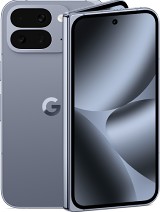
Google Pixel 10 Pro Fold




I think I'm DONE with Google's foldables...
Pros
- It boasts an IP68 rating for water and dust protection.
- The battery life feels surprisingly longer despite a smaller capacity.
- It features a preferred inner display design with rounder corners.
- The 5x telephoto zoom is favored over competitors.
- It offers better face unlock compared to Samsung.
Cons
- The phone is notably heavy and thick.
- The inner display has a very deep and noticeable crease.
- AI features like Magic Q and Now Nudge are consistently non-functional.
- Multitasking with
The Google Pixel 11 Pro Fold offers a few commendable features, including an IP68 rating, a surprisingly good battery life, and a preferred inner display design. However, these positives are significantly overshadowed by notable drawbacks. The device is criticized for its heavy and thick build, along with a deeply noticeable crease on its inner screen that detracts from the user experience.
Furthermore, key AI features consistently fail to function, and its
“The reason is the Pixel, it's heavy, it's thick, and you can feel that crease. And after a while, those little things, they start to add up.”
![MrMobile [Michael Fisher]](https://yt3.ggpht.com/RpqJy1uS9sbNkT9zExMcvg0_wiGr-84xC-D0k5gLyOtDw1NMSzySlMz-ldmBtWCKqgUzjHMu=s88-c-k-c0x00ffffff-no-rj)
Google's Folding Phone Is The Opposite Of Samsung's
Pros
- Camera features new creator software, including a praised teleprompter.
- Offers surprisingly solid and enduring battery life.
- Delivers good gaming performance without thermal throttling.
- Stays cooler in hand than competing foldables.
- Provides a highly recommended and thoughtful Android software experience.
Cons
- Charging speeds are disappointingly slow.
- Inner screen has a more visible crease.
- Hardware is considered clunky and behind competitors.
- High price is difficult to justify for its overall offering.
- Camera performance can be inconsistent compared to competitors.
The Google Pixel 11 Pro Fold stands out for its unique features and a highly recommended Android software experience, which is considered its primary strength. However, this is balanced by hardware that feels clunkier and behind the competition, making its high price a tough pill to swallow.
Despite strong battery endurance and good thermal management during performance, the device suffers from slow charging speeds and a noticeable crease on its inner screen. Ultimately, the Pixel 11 Pro Fold is a strong software package hindered by its hardware and value proposition.
“The Pixel packs features you can't find anywhere else, and a version of Android I'd be happy to recommend to anyone from the smartphone enthusiast to the smartphone inept.”
“But the price it asks for that privilege is clunkier hardware that pixel snap aside feels a few steps behind the competition at a price just as tough to swallow as any large format foldable.”
“On the other, this is more software play than hardware statement piece. And I wish I could run Pixel software on the Samsung Fold.”
First 11 things to do on your Pixel 11 (Pro/XL/Fold)
Pros
- Camera features include 10 customizable 'camera looks' that alter image processing.
- Gemini Intelligence offers advanced AI assistance for productivity and admin tasks.
- AI calling features like scam detection, call screening, and 'Hold for me' greatly enhance call management.
- 'Flip to Shh' provides a convenient and customizable way to silence the phone.
- Users can extensively customize screen resolution, timeout settings, and lock screen aesthetics.
Cons
- Gemini AI Pro requires a paid subscription after an initial six-month period.
- The default screen resolution is not set to maximum, requiring manual adjustment.
- Setting the screen to maximum resolution consumes more battery life.
- The default screen timeout of 30 seconds is impractically short.
The Google Pixel 11 Pro Fold, part of the Pixel 11 series, offers a highly customizable and AI-enhanced user experience. While some optimal settings require initial adjustment from their defaults, such as screen resolution and timeout, these efforts lead to a significantly more personalized and efficient device.
Key strengths lie in its innovative 'camera looks' and a powerful suite of AI features, including Gemini Intelligence for productivity and comprehensive calling tools like scam detection and 'Hold for me.' These features are highlighted as major advantages over competing Android phones.
Though Gemini AI Pro requires a subscription after an initial period and maximum screen resolution impacts battery, the overall experience is designed for long-term satisfaction and a deeply integrated user flow that remains beneficial months after setup.
“And that is your Pixel 11 setup the way it should be out of the box. You're getting a clean setup that you can be proud of.”
“And every single thing on this list changes something about how you're going to use this phone every single day.”
“And not just on day one when everything still feels exciting, but 3 to 6 months from now when you've stopped thinking about the setup entirely and it's just how your phone works.”

On paper it’s perfect - Pixel 11 Pro fold
Pros
- Responsive Pixel OS and fast side-mounted fingerprint sensor
- Exceptional AI dictation and accessibility features
- Acclaimed 24-hour battery life with fast wired and wireless charging
- Gorgeous HDR screen with high brightness
- IP68 water resistance and promised seven years of software updates
Cons
- Camera system is not the best in the Pixel 11 lineup
- Ultrawide camera exhibits color saturation issues
- Noticeable screen crease feels last-generation
- Distinct ridge due to slightly different side thicknesses
- Speakers struggle to get loud, though avoid distortion
“On paper this thing is the whole package.”
“new Tensor G6 processor, acclaimed 24 hours of battery life with new Qi 2.2 25 W wireless charging to go with its 30 W of wired charging, up to a terabyte of storage and 16 gigs of RAM, a new hinge that combined with their ceramic coated cover glass and ultra-strong back glass is supposed to make this thing what, three times as durable as Google's last generation foldable?”
“Not to mention, of course, IP68 water resistance, a promised seven years of software updates, and their best camera ever.”
Why didn't Google mention these?
Pros
- Upgraded Super Actua cover display with adaptive refresh rate.
- Faster 25W Qi 2.2 wireless charging.
- Features Wi-Fi 7 connectivity.
- Incorporates Ultra-Wideband for device tracking.
- Magic Capture aids in finding best photo moments from video.
Cons
- 8K video recording is cloud-dependent and slow.
- Features smaller batteries compared to previous models.
- Does not feature instant Night Sight found in other Pro models.
- Main camera is not a "Pro" upgrade, similar to the base Pixel 11.
- Lacks the 5x zoom update present in other Pro models.
The Google Pixel 11 Pro Fold introduces several welcome design improvements, including a thinner, lighter build with a durable glass fiber back, and an upgraded Super Actua cover display offering dynamic 1-120Hz refresh rates and always-on functionality. It also features faster 25W wireless charging and includes advanced connectivity like Wi-Fi 7 and Ultra-Wideband, alongside a new modem promising better 5G and power efficiency.
However, the device falls short in key "Pro" camera aspects, lacking instant Night Sight and the 5x zoom upgrade found in other Pixel 11 Pro models. Its main camera is comparable to the base Pixel 11, and its 8K video recording relies on a slow, cloud-based process, making it feel less "Pro" than its name suggests.
These camera limitations, coupled with the switch to smaller batteries, temper the overall appeal despite its design and display advancements, leading to a somewhat disappointing "Pro" offering.
“every single one of these phones besides the Pixel 11 Pro Fold in the US is still eSIM only. I just don't like this. I said last year I didn't mind it, but honestly, it's become very annoying in the last 12 months.”
“The slab Pixel 11 Pros have instant night sight. So, taking low-light photos is like four times quicker. But, guess what? The Pixel 11 Pro Fold doesn't have this. [...] And we got a camera update on the Pixel 11 Pro Fold, but it's not a pro camera. We didn't get the five times update that we did on the 11 Pros. You get the same main camera as you get on the Pixel 11. Like, this might be the least pro phone I've seen in a while.”
Hands-on with ALL Pixel 11 phones!
Pros
- Powered by the faster and more power-efficient Tensor G6 chip
- Features new "Camera Looks" and general video improvements
- Upgraded LTPO cover display enables always-on wallpaper
- Comes with 16GB of RAM
Cons
- The high price increase is not justified by the limited upgrades
- The main camera uses the same sensor as the base Pixel 11
- Lacks 4K portrait video functionality
- The main foldable screen's crease reappears after use
- Features a smaller battery capacity than its predecessor
The Google Pixel 11 Pro Fold presents a mixed bag, with several upgrades but also notable compromises and a higher price point. While it boasts Google's fastest Tensor G6 chip, improved camera features like "Camera Looks," and an upgraded LTPO cover display, these are overshadowed by significant drawbacks.
The device is criticized for its main camera using the same sensor as the base Pixel 11, lacking 4K portrait video, and featuring a persistent crease on its main foldable screen. Furthermore, the $100 price increase is deemed unjustified given these limitations and a smaller battery capacity than the previous model.
Overall, the reviewer expresses disappointment, feeling the phone does not live up to its Pro designation or premium price.
“the main camera is better this year, finally. But it only shares the same sensor as the Pixel 11. Like I do not understand why this is not the same sensor as the pro phone. So it is so frustrating that Google seem to give this a non-pro camera, especially for the price.”

Google Pixel 11/Pro/Fold Impressions: It Is What It Is
Pros
- Features a new 48-megapixel main camera.
- Equipped with the new Tensor G6 chip.
- Boasts new, brighter displays.
- Offers IP68 dust and water resistance, rare for foldables.
- Includes slightly faster wireless charging.
Cons
- Higher starting price of $1,900.
- Hinge improvements are subtle, not matching competitors.
- Still has a noticeable screen crease.
- The "Highlight" LED feature is under-baked and limited in functionality.
- Does not deliver a cutting-edge foldable experience for its high cost.
The Google Pixel 11 Pro Fold is an incrementally updated foldable featuring a new 48-megapixel main camera, the Tensor G6 chip, and brighter displays. It offers subtle improvements like a slightly thinner design and faster wireless charging, alongside appreciated IP68 dust and water resistance.
However, its new hinge offers only minor advancements, and the screen still presents a noticeable crease, failing to match the innovations seen in competitor foldables. With a starting price of $1,900, the phone is considered expensive given its incremental updates and lack of cutting-edge features in the foldable market, with its new "Highlight" LED feature also being under-baked.
“But the price also went up. It's also it's starting at $1,900 for the 256 gig fold, which is 100 bucks more than last year. [...] this is not the thinnest foldable out there. It's still got a bit of a crease. [...] it doesn't make the big step up that like Samsung and Oppo and others have.”

Did Google just launch the BEST looking phones of 2026?
Pros
- Enhanced camera software with features like Magic Capture and Instant Night Sight.
- Improved power efficiency from the Tensor G6 chip, leading to better battery life.
- Significantly faster CPU and enhanced AI capabilities with the Tensor G6 chip.
- Ultra-bright 3,600-nit display with robust Gorilla Glass Victus 2.
- Foldable model is three times more durable, thinner, and lighter than its predecessor.
Cons
- Aesthetic design is highlighted as a primary selling point, despite being deemed superficial compared to core functionalities.
The Google Pixel 11 Pro Fold showcases substantial upgrades, integrating the new Tensor G6 chip for improved AI performance, faster processing, and enhanced power efficiency, promising over 24 hours of battery life. It features a remarkably bright 3,600-nit display with Gorilla Glass Victus 2, and the foldable design is now three times more durable, thinner, and lighter.
New camera software, including "magic capture" and "instant night sight," aims to boost photography capabilities, though practical testing is still needed to confirm their full utility. While its beautiful design is expected to be a major selling point, the reviewer notes its superficiality compared to the phone's essential functionalities.
“That kind of takes me full circle on this first impressions hands-on thing, guys, today, that they just look beautiful and they will they will sell because of that.”
“And Google understands that. And it's not a bad thing. It really isn't. It's superficial and it's it's the least important thing really when it comes to a phone.”

Google Pixel 11 Hands on - The Phone Crisis Begins.
Pros
- Camera offers significantly improved video quality with sharper footage and accurate skin tones.
- New camera software features like 'Camera Looks' and 'Creator Suite' enhance creative control.
- Performance includes highly intelligent 'Rambler' dictation usable across all apps.
- Performance offers impressive live video dubbing via Gemini intelligence.
- Screen features brighter displays and noticeably thinner bezels.
Cons
- Camera's maximum 30x digital zoom yields poor quality shots.
- Performance includes a new composite back panel that might be easier to scratch.
- Performance's Gemini intelligence features will not be available in Europe at launch.
- Value is diminished by a $100 price increase without additional storage.
- Performance shows minimal hardware improvement and potential RAM regression.
The Google Pixel 11 Pro Fold introduces several advancements, including an updated main camera with 56% more light and significantly improved video quality, alongside new software features like 'Camera Looks' and 'Creator Suite'. It also boasts a new Tensor G6 chip, brighter displays, and innovative AI capabilities such as the 'Rambler' dictation and impressive live video dubbing.
However, the phone comes with a $100 price increase without offering additional storage, and its new composite back panel may be prone to scratching. Crucially, many of its Gemini intelligence features will not be available in Europe at launch, and overall hardware improvements are minimal, with potential regressions in RAM.
Given that older Pixel models quickly depreciate and many software enhancements will eventually trickle down, the reviewer suggests that last year's flagship offers a better value. The minimal performance difference and hardware stagnation make the increased price of the 11 Pro Fold less justifiable.
“But, if you really want the Pixel, which does have merit like the ultra-clean software and early access to these incredible features, then there's never been a better time to get the last one.”
“And then the fact that the hardware has barely improved, and if anything the RAM has gone backwards, means that you're not even really going to be much less future-proofed, and you probably won't notice a performance difference either. All finished off by the fact that most improvements this time around are coming by a software and internet-based AI tricks, meaning that you're going to get at least some of those perks just as trickle down.”
All the Pixel 11 leaks prove you won’t need to upgrade
Pros
- New MediaTek modem may improve 5G signal and efficiency.
- New Tensor G6 chip built on an advanced 2nm process.
- Tensor G6 chip is hoped to run cooler than the previous generation.
- Slightly reduced weight and thickness compared to the predecessor.
Cons
- Expected to have a smaller battery.
- Anticipated to retain the "terrible" screen crease.
- Features a $100 price increase without additional storage or significant improvements.
- Remains notably heavier and thicker than competing foldable phones.
- Considered a "hard sell" in a competitive market.
The Google Pixel 11 Pro Fold appears to be a disappointing iteration, offering only minor refinements in weight and thickness but still falling short of competitors like the Samsung Fold 8 Ultra in terms of bulk. It is expected to come with a smaller battery and retain the much-criticized screen crease from the previous model, with no apparent fixes.
Despite the introduction of a new Tensor G6 chip, hoped to improve performance and thermal management, and a new MediaTek modem for better 5G efficiency, these potential upgrades are overshadowed by other drawbacks. The device is also slated for a $100 price increase without offering significant feature or storage enhancements. This combination of factors leads the reviewer to believe it will be a "hard sell" and struggle to compete in the foldable market.
“then there's not much changing from the Google Pixel 10 Pro Fold. As a Foldy fan, I'm disappointed here. The big update is that the fold is going to get slightly more refined. So, it's going to be 19 g lighter from 258 g to 239 and then from 10.8 mm folded to 10.1 mm. And then even when it's unfolded, it should be going to 5 mm from 5.2 mm. But the problem here is that that is so much heavier and thicker than the Samsung Fold 8 Ultra. And I don't know, I just don't see how Google are going to compete this year with the Google Pixel 11 Pro Fold.”
“We're expecting a smaller battery than last year, and it could even have the exact same crease as the Google Pixel 10 Pro Fold, and that is terrible. [...] And I just don't see who's going to be picking up a Google Pixel 11 Pro Fold when the Samsung Fold 8 Ultra exists.”
We went inside Google's SECRET Pixel lab!
Pros
- Exceptional durability of the folding display and hinge.
- Rigorous stress testing ensures structural integrity.
“Google puts the Pixel 10 Pro Fold through its paces. so repeatedly opening and closing it to stress test the hinge and the folding display.”
“Google confidently says that the Pixel 10 Pro Fold is rated for 200,000 folds, but they have definitely gone way beyond that, but the official number is 200,000.”
The BEST foldable phone of 2025 is…
Pros
- Offers a highly praised Pixel photography aesthetic
- Features a valuable 5x optical zoom camera
- Delivers flagship-level performance in everyday use
- Provides a completely stock Android experience
- Boasts a fantastic internal display and usable external display
Cons
- Does not include official stylus support
The Google Pixel 10 Pro Fold stands out with its esteemed Pixel photography, featuring a valuable 5x optical zoom. It provides a pure stock Android experience and delivers excellent flagship performance for daily tasks, with screens that are on par with other top foldables.
Despite not having official stylus support, the device is considered a fantastic foldable, contributing to a strong year for such phones, especially when considering Google's competitive trade-in offers.
“However, all three are fantastic foldables. We have had a very good year for this kind of phone in 2025.”
Can foldable phones survive 2026?
Pros
- The bezels have shrunk slightly for a refined display appearance.
- It is priced cheaper than the Samsung Galaxy Z Fold 7.
Cons
- The camera quality is comparable to phones $1,000 cheaper.
- It has a weaker battery life than traditional flagship phones.
- The phone is still very expensive at $1,700.
- Google made only minor upgrades, leading to a "lazy year" perception.
The Google Pixel 10 Pro Fold offers only minor upgrades, with slightly shrunk bezels and an IP68 rating being among the few notable changes from its predecessor. However, the device presents significant compromises, particularly in camera quality and battery life, which are areas where it lags behind both cheaper phones and traditional flagships.
Despite being priced lower than a competitor at $1,700, its high cost combined with these compromises makes it a difficult recommendation. The reviewer expressed frustration, suggesting Google should have waited to deliver more substantial improvements to the foldable experience.
“It's an okay foldable, but it does remind me of my constant frustrations with foldables in general.”
“The Pixel 10 Pro Fold is a good example of the upgrades being so small, it might have been better for Google just to wait another year or maybe 18 months and just put a little bit more behind it.”
“But actually, it's just quite a lazy year from Google, especially when you have a look at things like the Galaxy Z Fold 7.”
I’m Desperate to Like This - Google Pixel 10 Pro Fold
Pros
- Excellent battery life.
- Fast wired charging speeds.
- Impressively bright internal and external displays.
- Extensive 7-year software and security update commitment.
- First foldable phone with IP68 dust and water resistance.
Cons
- Performance lags behind market competitors.
- Video recording quality is affected by "jitter stutter" and "rolling shutter."
- High starting price of $1,800.
- Slower 15W wireless charging compared to other Pixel models.
- AI features like Gemini exhibited hallucination issues and slower performance.
The Google Pixel 10 Pro Fold is Google's most advanced foldable, featuring an 8-inch internal and 6.4-inch external display, both impressively bright, and notably, it's the first foldable with IP68 dust and water resistance. It offers excellent battery life and fast wired charging, alongside an industry-leading 7 years of software support.
However, its Tensor G5 chip, while improved, still falls short in performance compared to market competitors, and camera video quality is hindered by "jitter stutter" and "rolling shutter." The device also carries a high starting price of $1,800, and wireless charging is slower than some other Pixel models.
Despite these advancements and robust software commitment, the reviewer finds its overall value proposition, especially concerning performance and price, makes it a difficult recommendation.
“Google's Tensor G5 is much faster than their older Tensor G4. The bad news is compared to Google's competition in the market, the Tensor series is kind of a dog.”
“It starts at $1,800. Yikes.”
“I'd still take the iPhone, like no question for video specifically.”
Let's put the two most popular foldables against each other...
Pros
- Features the largest battery ever in a non-silicon carbon folding phone (5,150 mAh).
- Offers higher peak display brightness at 3,000 nits.
- Includes a preferred 5x telephoto lens over 3x options.
- Has a breakthrough IP rating for water and dust resistance.
Cons
- Overall camera quality is disappointing, with poor video and no improvement on ultrawide/telephoto from last year.
- Its Tensor G5 chip is less powerful than competitors, leading to lower benchmark scores and inferior gaming.
- The inner display has more noticeable bezels and a slightly more pronounced crease.
- The cover display lacks LTPO, limiting its refresh rate to a minimum of 60Hz and preventing always-on wallpaper.
- The phone is very expensive, and the base 256GB storage is considered insufficient for its price point.
- The phone is largely similar to last year's model with few significant upgrades beyond battery and IP rating.
The Google Pixel 10 Pro Fold introduces a larger 5,150 mAh battery and a significant IP68 rating, which are notable improvements. It also boasts a bright 3,000 nit display and a preferred 5x telephoto lens, making it appealing in some key areas.
However, the device falls short in several critical aspects, including disappointing camera performance, a less powerful Tensor G5 chip leading to inferior gaming, and a cover display that lacks LTPO technology. Furthermore, the inner display's more noticeable bezels and pronounced crease detract from the user experience, while its high price combined with a meager 256GB base storage raises questions about its overall value.
Ultimately, despite some advancements, the phone is largely perceived as a minor upgrade over its predecessor, failing to deliver significant improvements across the board. The reviewer highlights that it's essentially the same phone as last year, making it a difficult recommendation over its more advanced competitors.
“But then the bigger battery, the IP rating and pixel snap on the Pixel draws me right back.”
“The reason I didn't pick the Pixel is despite its IP rating breakthrough, which we have to just say is really cool, it didn't really upgrade anything else. And it's basically the same phone as last year...”

Google Pixel 10 Pro Fold - Unboxing and Pixel 10 Pro XL "Real Review"
Pros
- Features a flagship Google Tensor G5 processor.
- Guarantees 7 years of Android updates and security patches.
- Includes a large 5015 mAh battery with fast and wireless charging.
- Offers bright, high refresh rate displays with reduced side bezels.
- Boasts IP68 dust and water resistance with Gorilla Glass Victus 2.
Cons
- The starting price of $1,800 is considered expensive.
- It is deemed inferior to the Galaxy Z Fold 7 in overall experience.
- Lacks a microSD card slot for expandable storage.
- The main display still has a slight crease and large bezels.
- The phone is perceived as heavy and has an inconveniently placed power button.
“fresh out of the box, I'm giving the Pixel Fold a major major major go. It's definitely a dope fold.”
“It's just that when you use the Galaxies, everything else is going to be second place. But if you love the Pixel OS and the Pixel features, you're going to love this one.”
Google Pixel Pro Fold Review: Not Compatible!
Pros
- Solid battery life, often achieving six hours of screen-on time.
- First foldable with IP68 water and dust resistance.
- Brighter cover and inner displays, with the cover screen reaching 3000 nits.
- Smooth performance for regular everyday use.
- Re-engineered hinge provides functional and aesthetic improvements.
Cons
- Tensor G5 chip is underpowered compared to competing flagship chips.
- Selfie cameras are not great, and main cameras are a half-step down from Pixel flagships.
- Inner screen has a very visible and palpable crease and aggressively medium bezels.
- High $2,000 price point for hardware that isn't bleeding-edge.
- Remains a chunky foldable compared to thinner competitors.
The Google Pixel 10 Pro Fold offers a re-engineered hinge, contributing to brighter displays, improved battery life, and IP68 water/dust resistance, making it a functional device with smooth everyday performance. However, its new Tensor G5 chip falls short in raw power compared to competitors, and its cameras are a half-step below flagship Pixel quality, particularly the subpar selfie cameras.
Despite its solid battery and display improvements, the phone retains a chunky design and a noticeable screen crease. Priced at nearly $2,000, it struggles to justify its cost against rival foldables that offer more cutting-edge hardware, making it a difficult recommendation in a competitive market.
“the biggest change versus last year's Pixel Fold, no joke, is the new hinge. It's been re-engineered so there are both aesthetic and functional improvements.”
“this Pixel is clearly still not a hardware leader in any way. Like it's still kind of a chunky foldable phone, which is very noticeable when compared to a lot of these newer ultra thin folding phones.”
“This is a really good phone in a vacuum, but we're not in a vacuum, so you have to consider the other options that are really exciting and really pushing the limits and then you start to compare it and notice other things that are great about those other phones.”
Google Pixel 10 Pro Fold Review: Pixel Imperfect
Pros
- The large 5,150 mAh battery provides adequate daily usage.
- MagSafe compatibility is a significant convenience.
- The 8-inch screen is effectively utilized for multitasking.
- Gboard offers impressive new voice control features.
- Still photos are quick and reliable.
Cons
- The camera system is underwhelming due to recycled components and weak video performance.
- The software experience feels "undercooked" with several glitches.
- Wireless charging is relatively slow at 15 watts.
- The display brightness throttles quickly.
- The device is considered overpriced for its compromises and recycled parts.
The Google Pixel 10 Pro Fold is presented as a mixed device, offering advancements in theoretical durability and welcome conveniences like MagSafe. However, these positive aspects are significantly overshadowed by persistent compromises.
The camera system underperforms due to recycled components and weak video capabilities, while the software experience is notably buggy and incomplete. Given its almost $1,800 price point, the reviewer concludes the device demands too much for its deficiencies and questions its overall value and recommendation to a wider audience.
“the Pixel 10 Pro Fold is only half a win. While it sets a new standard for theoretical durability and built-in convenience, it also retains some of the most frustrating compromises that have marred foldables since the beginning.”
“What it feels like instead is a somewhat watered down afterthought that demands too much for too many compromises and relies too heavily on AI gimmicks to give it value.”
“because I like its software better than any other booktype foldables, and because I've been waiting so long for MagSafe on Android, I will probably still carry it in lie of any other large foldable. But I'm just not sure how many other people should.”

Google Copies Apple and Once Again Ignores Poland
Pros
- Bright 120 Hz OLED screen
- Updated UFS 4.0 storage
- Gorilla Glass Victus 2 screen protection
- Seven years of update support
Cons
- Significantly weaker Tensor G5 processor performance compared to competitors
- Unnoticeable benefits from UFS 4.0 in daily use
- Minimal upgrades in the Fold compared to the previous model
- High price of the Fold unjustified by minimal changes
- Still present 'incredible crease' on the folding screen
The Google Pixel 10 Pro Fold features the newer Tensor G5 processor, whose performance still lags behind competitors, and a bright 120 Hz OLED screen that, however, still exhibits a noticeable crease when folded.
The main criticisms concern the device's disproportionate price in relation to the offered changes, which are considered minimal and do not justify an upgrade for users of previous models. Despite seven years of update support and faster UFS 4.0 storage, these improvements do not translate into tangible benefits in daily use.
The reviewer strongly advises against purchasing or upgrading to the Google Pixel 10 Pro Fold, emphasizing that the device does not offer sufficiently significant innovations to justify its cost.
“for users of the 9 series, including myself as a year-long user of the Pixel 9 Pro Fold. This is great news because I personally absolutely do not plan any kind of upgrade”
“spending about 10 zlotys [approx. $2.50] on a foldable smartphone, which still features an incredible crease, a minimally larger screen, a new processor, and a slightly smaller bezel on the left side. For me personally, nothing special.”
“For me, there are clearly too few changes.”
The Pixel 10 Sets A New Bar For Android (and Google!)
Pros
- Achieves an industry-first IP68 dust-tight rating for a foldable
- Features a more impact-resistant display
- Includes a durable steel hinge with special cams for friction
- Integrates the new Pixel Snap magnetic charging system
- Comes with a slightly larger battery capacity
Cons
- Has downgraded ultrawide and telephoto camera specifications
- Carries a premium $1,799 price point for reduced camera capabilities
The Google Pixel 10 Pro Fold introduces significant durability enhancements, including an industry-first IP68 dust-tight rating for a foldable, a more impact-resistant display, and a robust steel hinge. It also benefits from the new Pixel Snap magnetic charging system and a slightly larger battery.
However, the device disappoints with downgraded ultrawide and telephoto camera specifications compared to its slab siblings. This camera compromise is particularly notable given its premium $1,799 price point.
“this one boasts a rating no foldable has ever achieved. IP68, the six denoting a dust tight device.”
“the Fold still packs downgraded ultrawide and telephoto camera specs compared to its slab siblings, which on paper at least, frankly sucks when you're talking about a phone that costs $1,799”
Google Pixel 10 / 10 Pro Hands on - Too Much Google?
Pros
- It is the first foldable with an IP68 water and dust protection rating.
- Features larger batteries around 5,000 mAh for better endurance.
- Supports G2 wireless charging with strong magnetic compatibility.
- New Tensor G5 chip offers improved AI and CPU performance.
- All Pixel 10 generation phones feature brighter screens.
Cons
- The camera app experiences persistent lag during zooming.
- Portrait mode suffers from poor edge detection, leading to flawed results.
- Its cameras are almost identical to the much cheaper base Pixel 10.
- The Tensor G5 chip significantly lags behind competitors in raw performance.
- Its body, bezels, and thickness are not competitive with other foldables.
The Google Pixel 10 Pro Fold introduces some notable features, including an IP68 water and dust protection rating, larger batteries with magnetic charging, and an improved Tensor G5 chip for AI and CPU tasks. These advancements contribute to better endurance and some innovative camera capabilities.
However, the phone suffers from several significant drawbacks, such as persistent camera app lag, poor portrait edge detection, and cameras that are nearly identical to the more affordable base Pixel 10. The Tensor G5 chip also falls significantly behind competitors in overall performance.
Ultimately, the Pixel 10 Pro Fold's design is uncompetitive, and its hardware is considered lacking for its premium $1799 price, presenting a poor value proposition.
“the hardware is pretty lacking for what you're paying.”
“the actual body of the phone, the bezels on the front, the thickness of the thing, they're not in line with what other companies are offering now.”

Google Pixel 10 & Pro XL - Watch BEFORE You Buy! (seriously...)
Pros
- The battery capacity has significantly increased, promising much improved battery life.
- It features the new Tensor G5 chip, delivering substantial performance boosts in AI and CPU.
- Advanced AI-powered software enhances camera capabilities and editing features.
- The screen brightness has increased, and the device features a thinner folded design with tougher screens.
- Google promises seven years of Android updates, offering excellent long-term software support and a clean UI.
- The phone comes with 256GB storage as standard and offers a new 1TB storage option.
Cons
- The main camera hardware specifications, including resolution and sensor size, remain unchanged from the previous model.
- For US users, the phone is now limited to eSIM only, dropping support for physical SIM cards.
- Wired and wireless charging speeds are not top-tier, capping at 30W and 15W respectively.
- There is no improvement in the screen's low 240Hz PWM, which could be a concern for some users.
“In fact, in my battery test, the Pixels typically come last or second from last. Well, then fingers crossed that the new Tensor G5 chip along with bigger batteries will give the Pixels a nice little boost.”
“The biggest upgrade to Tensor we've ever seen, they say. It's a 3 nanometer TSMC chip, which they're claiming is about 64% faster in terms of AI, about 30ish% faster, 34% faster uh for the CPU, and just generally they're saying double digits improved, which could be between 10 and 99% uh for the overall phone versus last year.”
“Prices have stayed the same, at least here in the UK. And as always, being Pixel phones, they will always be the first to get new Android software. Google promises seven years of updates, and there's no ugly third-party skins or bloatware.”
Google Pixel 10/Pro/Fold Impressions: Magnets!
Pros
- Battery: Features a slightly larger 5,000 mAh battery.
- Battery: Supports 15W Qi2 wireless charging with built-in magnets.
- Performance: Equipped with the new Tensor G5 processor and 16GB RAM.
- Performance: Offers a smooth and snappy user experience for multitasking.
- Screen: The outer display is slightly larger and brighter, feeling more like a regular phone.
Cons
- Camera: The camera setup largely remains the same as its predecessor, with only a new primary sensor.
- Screen: The interior display still has a noticeable crease.
- Value: The price remains high at $1,799, unchanged from the previous generation.
“The most important piece, which is the hinge, got the most work. It's this new gearless hinge, and because it's much smaller, it makes that left-side bezel much more trim, leaving the outside screen feeling much more just like a regular, normal phone instead of being slightly offset like last year.”
“And it's now IP68 dust- and water-resistant, which I believe is the first time we've ever seen a foldable be fully dust- and water-resistant.”
“The battery is a little bit bigger now: 5,000 milliamp-hours. That's nice to see. [...] Tensor G5. 16 gigs of RAM. Up to a terabyte of storage.”
“It's all in a package that's just slightly thicker than last year's.”
“But I do also have to admit it doesn't really do anything that other foldables don't. Like, it's not offering some massive, dramatic improvement.”
Pixel 10 series: 10 things you NEED to know!
Pros
- Significantly larger battery capacity
- Faster wired and wireless charging with Pixel Snap
- Improved and more durable cover and inner displays
- Fastest and most energy-efficient Tensor G5 processor
- Advanced AI-powered camera features like C2PA and Ask Photos
The Google Pixel 10 Pro Fold introduces substantial enhancements, featuring a more powerful and energy-efficient Tensor G5 processor and an improved display experience with brighter, more durable screens and a better hinge.
Battery performance is boosted with a larger battery and faster wired charging, complemented by Qi2 wireless charging and the new Pixel Snap magnetic system. The camera system is upgraded with advanced AI functionalities, including C2PA watermarking for content authenticity and "Ask Photos" for verbal editing commands, all while retaining its $1799 price with 256GB base storage.
“The Pixel 10 Pro Fold also has a significantly larger battery and faster wired charging.”
“all four phones charge at faster speeds and support chi 2.”
“The biggest thing about this though is Pixel Snap, which is basically like Apple's Mag Safe, but for Pixels.”
“There are magnets built into the backs of all the phones, including the Pixel 10 Pro Fold. Using these magnets, you can snap the phones directly onto charging docks, just like you can do with iPhones.”
“When you shoot any photo with a Pixel 10 device, your phone will automatically add credentials based on the Coalition for Content Provenence and Authenticity or C2PA.”
“With this new Pixel 10 feature, you can just say what you want to do and your phone will make the edits.”
“When you're taking a photo, you'll now get some helpful hints from AI to help you get the best image possible.”
“The cover display is bigger and brighter, and the inner display is also brighter and covered with more durable materials.”
“Finally, the Pixel 10 Pro Fold sticks with the same $1799 price as last year.”
“That also comes with 256 GB of storage at the base”
Did Google just launch the BEST phones of 2025?
Pros
- Advanced 48 MP main camera with impressive 5x and 10x optical zoom capabilities
- Comprehensive AI camera features for improved photography and editing
- Powerful Tensor G5 chip with enhanced AI and CPU performance
- Industry-leading 30,000 nits brightest inner display on a foldable
- First foldable with IP68 rating and twice the durability of previous generations
The Google Pixel 10 Pro Fold emerges as a highly impressive device, showcasing significant advancements in its camera system, performance, and screen technology. It features a powerful Tensor G5 chip, a 48 MP main camera with advanced optical zoom, and an inner display that reaches an industry-leading 30,000 nits brightness. The phone also boasts enhanced durability with an IP68 rating and improved battery life, while maintaining last year's pricing.
Beyond hardware, the 10 Pro Fold integrates a suite of AI-driven features across its camera and system, including Camera coach, Ask Photos, Gemini Live, and intelligent call management. These innovations, combined with its 16GB RAM and up to 1TB storage, position it as a strong contender in the foldable market. The reviewer's overall impression is highly favorable, highlighting its robust build and cutting-edge features.
“And it's apparently two times more durable than the previous generation. It's also the first foldable phone with an IP68 rating, which is nice to hear.”
“Brighter display, 30,000 nits on the inner display, which is the brightest on any foldable apparently.”
“a telephoto with a five times and 10 times optical quality zoom and up to 20 times super res zoom. That will be interesting because as much as I love the Zfold 7, the one thing I still want to have improved a bit more is the telephoto.”

Google Pixel 10 and Pro Fold hands-on: updates you can’t see
Pros
- Features the new, more efficient Tensor G5 chipset for improved performance.
- Offers up to 60% faster on-device AI capabilities.
- It is the first foldable phone to achieve an IP68 dustproof rating.
- The dustproof rating is enabled by an innovative new gearless hinge mechanism.
- Supports faster Qi2 wireless charging with integrated magnets.
Cons
- The price of $1799 is considered a high cost.
“The Pixel 10 Pro Fold is the first foldable with an IP68 rating. That means it is fully dustproof.”
“and the Pixel 10 Pro Fold is $17.99, which is a lot of money, but it's not $2,000.”
EVERYTHING we know about the Google Pixel 10 series
Pros
- Features the largest battery in a folding phone.
- New Tensor G5 chip offers improved performance.
- Anticipated IP68 rating provides significant dust and water protection.
- Comes with a larger and brighter 6.4-inch cover display.
- Introduces Qi2 wireless charging with magnetic Pixel Snap accessories.
Cons
- Cameras remain unchanged from the previous model.
- The ultrawide camera quality is noted as not being great.
- Wired charging speed is slow at 23W.
- Tensor G5 chip still lags behind flagship Snapdragon chips in raw power.
The Google Pixel 10 Pro Fold is poised for a notable upgrade this year, highlighted by its anticipated IP68 rating, making it the first foldable with comprehensive dust and water protection. It will also feature a larger 5,150 mAh battery and a brighter 6.4-inch cover display. The new Tensor G5 chip promises a 36% performance boost, alongside the introduction of Qi2 wireless charging and magnetic Pixel Snap accessories.
However, the device's cameras and slow 23W wired charging speeds are expected to remain unchanged from the previous generation, with the ultrawide camera noted as a continuing weakness. Despite these areas for improvement, the overall sentiment points to a significant and exciting year for the Pixel 10 Pro Fold, particularly due to its advancements in durability and core hardware.
“the Pixel 10 Pro Fold I don't think is going to disappoint. [...] But the biggest update to the Pixel 10 Pro Fold is going to be its IP rating because it should be getting an IP68 rating.”
“I think it is a bit of a bigger year for the Pixel 10 Pro Fold.”
Apple Apologizes for iOS 26 and the iPhone 17 Pro Design Controversy
Cons
- High prices for the entire Google Pixel 10 series
- The price of the Pixel 10 Pro Fold (up to almost €2300 for 1 TB) is very high
- The phones are more expensive than iPhones
- The prices are not optimistic
“it turns out that Pixels will be more expensive than iPhones.”
“However, the prices are not optimistic.”